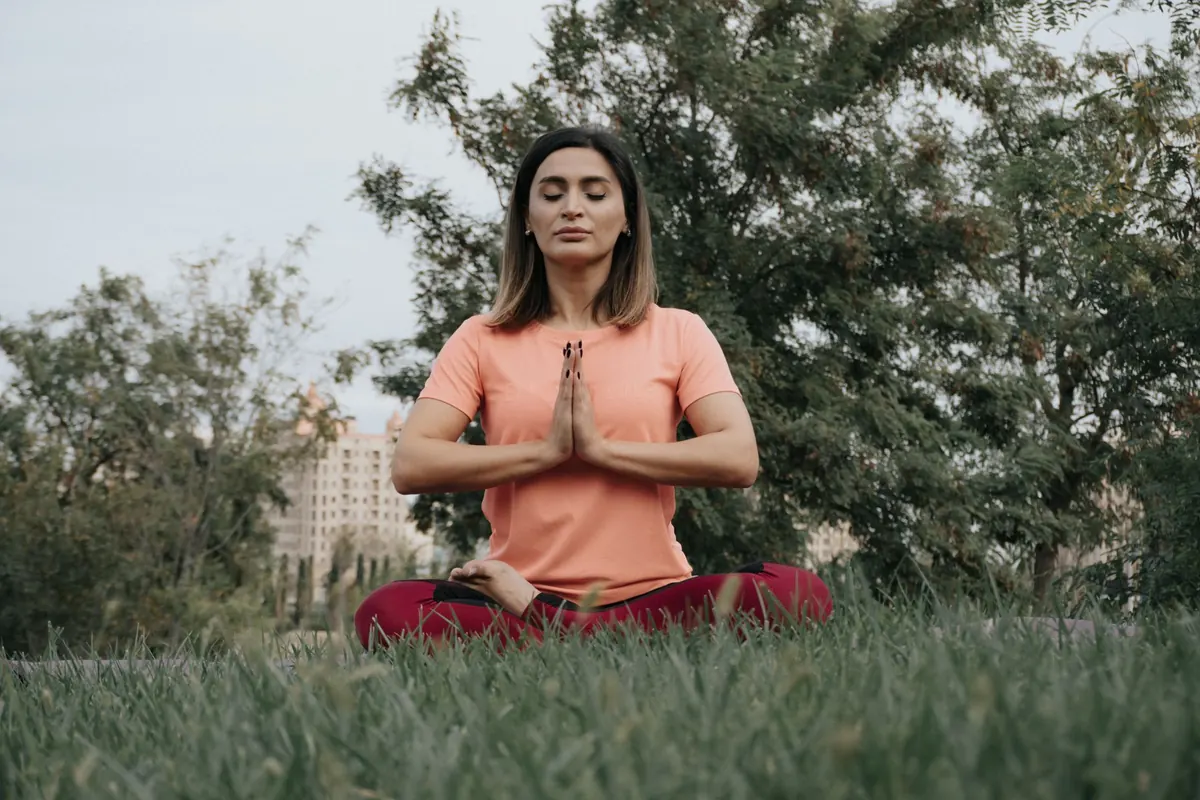
Picture two people. One is sitting cross-legged on a cushion at seven in the morning, eyes closed, following the breath. The other is standing at a bus stop in the rain, noticing the cold on their face and the impatience in their chest — and letting both be there. Both are practising. Only one of them is meditating.
The two words get used as if they mean the same thing, and plenty of teachers blur the line on purpose. But if you are booking your first retreat, downloading an app, or simply trying to feel less strung out by Friday, the difference is worth knowing. It changes what you do, how long you do it for, and what you expect to happen.
What meditation actually is
Meditation is a practice. It has a shape: a time, a place, a technique, and usually an anchor for your attention — the breath, a sound, a sensation, a phrase.
There are many styles. Focused attention practice narrows the mind onto one thing. Open awareness practice does the opposite, letting thoughts and sounds come and go without chasing them. A body scan moves attention slowly through the body, while loving-kindness meditation deliberately cultivates warmth towards yourself and others. There is also walking meditation, and movement practices that keep the body busy so the mind can settle.
What they share is repetition. You sit, you get distracted, you come back. That return is not a failure of the practice; it is the practice. Think of it as going to the gym for your attention — you would not expect one session to change your body, and you should not expect one session to change your mind.
What mindfulness actually is
Mindfulness is less a technique and more a way of paying attention: on purpose, in the present moment, and without immediately judging what you find.
That last part is where most people trip up. Mindfulness is not positive thinking. It is not clearing your mind of thoughts — thoughts keep coming, whether you like it or not. Nor is it the same as relaxation, though relaxation often follows. You can be mindful while standing in a queue, drying a saucepan, listening to a friend complain about their boss, or noticing the exact moment you decide to open your phone for the fourth time in an hour.
Because it depends on attention rather than on a cushion, mindfulness can be brought to almost anything. You can be mindful in a meeting. You can be mindful halfway through an argument, which is often when it helps most.
Where the two overlap
Mindfulness is the quality. Meditation is the training that strengthens it. Most mindfulness meditation sits in both camps at once, which is why the terms get muddled.
- Meditation is usually scheduled. You set aside ten, twenty, thirty minutes and follow a method.
- Mindfulness is portable. It can happen in the middle of a Tuesday afternoon with no equipment at all.
- Mindfulness meditation is the overlap: formal practice with the intention of being present and non-judgemental.
A useful comparison is scales and playing music. Practising scales is not the same as playing a piece well, but the scales are what make the playing possible. Sit for twenty minutes and you are practising scales. Notice your shoulders climbing towards your ears during a difficult phone call — and let them drop — and you are playing.
Why the difference matters in practice
Confusing the two causes two very common problems.
The first is deciding you are bad at meditation. If you believe the goal is an empty, peaceful mind, then every wandering thought looks like evidence of failure. It is not. Wandering is what minds do. The noticing is the skill.
The second is doing all your practice on a cushion and none of it anywhere else. Twenty minutes of calm at 7am can evaporate by 7.20am if you leave it behind in the room where you sat.
So choose according to what you need. If your days are scattered and you cannot find a spare half hour, short moments of everyday mindfulness will probably do more for you than an ambitious plan you abandon by Thursday. If you want to train attention properly, or you are drawn to the deeper quiet that comes with longer sitting, build a meditation habit and let mindfulness spread from there.
How to try both this week
A five-minute breath meditation
- Sit somewhere you will not be interrupted. A kitchen chair is fine. Feet flat, hands in your lap, spine upright without being stiff.
- Set a timer for five minutes and use the breath as your anchor.
- Follow the physical sensation of breathing — cool air at the nostrils, the chest and belly rising and falling. No need to control it.
- When your attention drifts, note briefly where it went and return to the breath. Repeat as often as needed. This is the whole exercise.
- When the timer sounds, pause and notice how you feel without deciding whether it was a good or bad session.
Three everyday mindfulness moments
- At the sink. For one minute of washing up, feel the temperature of the water, the weight of the plate, and the sound of the tap. That is it.
- On the walk to the shop. Take three slow breaths and feel your feet meet the ground. Notice one sound you would normally filter out.
- In conversation. Let someone finish their sentence before you plan your reply. Notice the urge to interrupt and let it pass.
A word of caution: if you have experienced trauma or live with a mental health condition, intensive meditation can sometimes bring difficult material to the surface. Start with short sessions, ideally alongside a qualified teacher, and speak to your GP or a mental health professional if you are unsure whether a particular practice is right for you.
Start smaller than feels impressive
Pick one thing and keep it dull. Five minutes of sitting on most days, or one daily routine — the kettle, the shower, the walk to the car — done with full attention. Give it a week before you judge it.
Then notice what shifts. Perhaps you sleep a little better. Perhaps you snap at your flatmate one time fewer. Perhaps nothing obvious happens, which is also a normal result and not a reason to stop.
If you want both in one go, a mindfulness retreat or a day of silence gives you formal practice and long stretches of everyday attention side by side: walking slowly, eating without distraction, sitting with whatever turns up. Many people find that combination teaches the distinction faster than any explanation. One day, you stop asking whether you are meditating or being mindful, and simply notice that you are here.
Photo: Zulfugar Karimov / Pexels