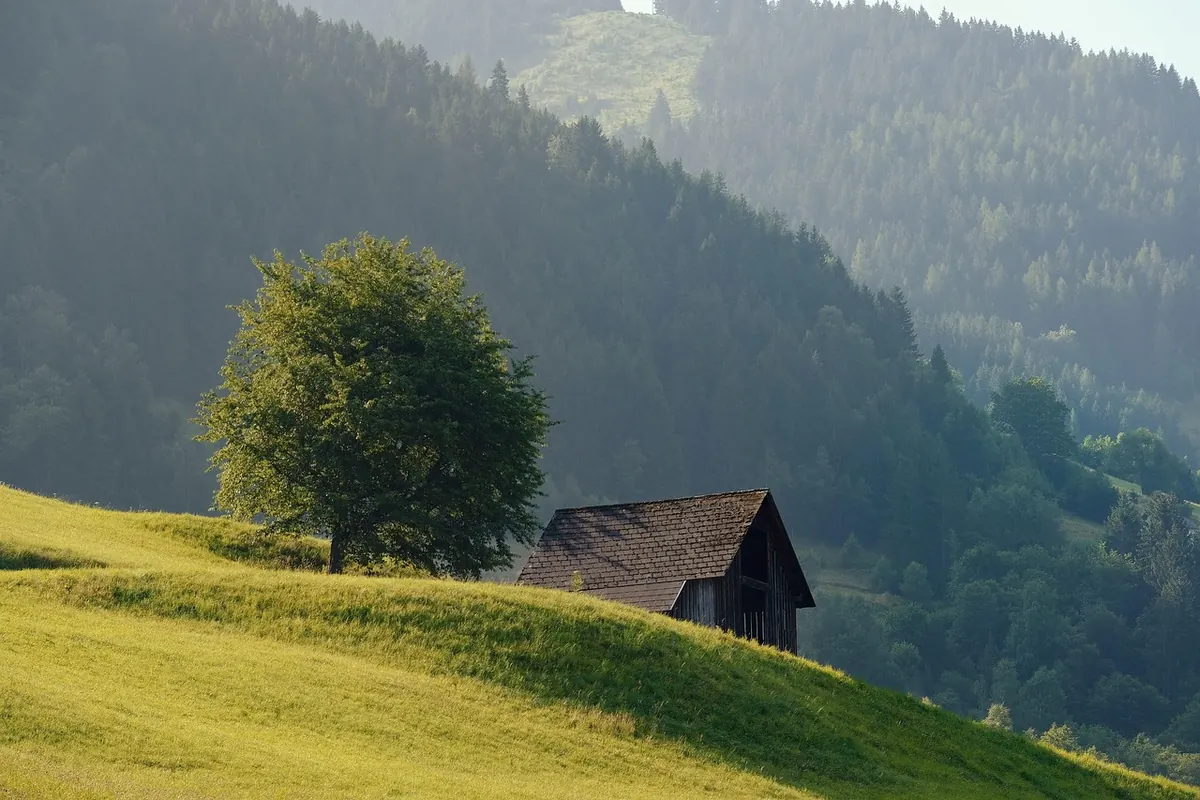
A retreat can hand you a bamboo toothbrush at check-in and still fly its "seasonal" vegetables in from another continent. It can sit in a rewilded meadow and run its hot tubs off a diesel generator. That does not make the people running it dishonest — sustainability is genuinely complicated — but it does mean the leaf logo on the homepage is not evidence of anything much.
The difference between a real environmental commitment and a coat of green paint tends to show up in unglamorous details. Certificates with an auditor's name on them. Menus that change with the season. A page explaining how to arrive by train. Here is what to look for, and what to ask before you pay a deposit.
Why the word "eco" tells you almost nothing
In most marketing, "eco", "natural" and "planet-friendly" are unregulated. Anyone can print them. Greenwashing rarely looks like a lie; it looks like vagueness. A retreat claiming to "respect the environment" without naming a single measure, target or date is not necessarily bad — it may simply never have measured anything.
Watch for the tell-tale patterns: a sustainability page that talks only about the spa's organic oils and never about energy, water or waste. A "green" badge designed in-house that no outsider has ever checked. Claims in the past tense ("we planted trees") with nothing about what happens now. Real commitments come with numbers, names and a plan for next year.
Certifications: what counts and what doesn't
A credible certification is awarded by a third party, follows a published standard, involves a site visit or documented audit, and can be taken away. Anything else is decoration.
- Tourism-specific schemes. The Global Sustainable Tourism Council (GSTC) sets a baseline standard and formally recognises certification bodies that meet it, including well-known schemes such as Green Key, Travelife, EarthCheck and Green Globe. A venue certified by a GSTC-recognised body has been assessed on more than recycling bins.
- Whole-business certification. B Corp covers an operator's governance and social impact as well as its environmental footprint. Useful if the retreat is part of a larger company.
- Building performance. Standards such as Passivhaus, BREEAM and LEED relate to the fabric of the building — insulation, energy demand, materials — which matters enormously for a place with heated pools and underfloor heating.
- Food and supply chains. Organic certification (for example Soil Association in the UK), Fairtrade and Rainforest Alliance logos on the coffee, tea and chocolate tell you something specific about those products. They say nothing about the rest of the menu.
Two useful questions: Which scheme, and who audits it? Then: Can you send me the summary of your last assessment? A venue with a genuine certificate will usually be pleased to be asked.
Follow the food
Kitchens reveal more than brochures do. Ask where the eggs, milk and vegetables come from and whether the chef can name the farms. A kitchen garden plus a short, changing menu is a strong signal. Out-of-season strawberries in January, year-round avocado and imported bottled water are the opposite.
Meat and dairy usually carry the heaviest footprint on a retreat menu, so it is fair to ask how often they appear and whether vegetarian options are treated as an equal rather than an afterthought. Also worth checking: how food waste is handled, whether there is a compost system, and whether the tap water is drinkable and offered as standard rather than sold in plastic.
Conservation that goes beyond the bird box
Many retreats sit on land worth protecting — coast, woodland, meadow, dry hillside. The question is whether they are protecting it or just occupying it. Ask what the site looked like before, what has been restored, and how that work is funded and monitored. A written environmental policy with named responsibilities and annual targets is a good sign; a staff member who can talk you through it is better.
Look for practical detail: how wastewater is treated, where water comes from in a dry region, whether lighting is kept low for wildlife, whether chemicals are used on the grounds, whether buildings were renovated rather than newly built, and whether any single-use plastic still turns up in the rooms. Honest venues will admit where they fall short. Perfect-sounding venues usually are not.
Getting there usually matters most
For most trips, travel to and from the retreat is the largest part of the environmental impact — particularly if you fly. That makes transport the first thing to check, not the last.
Before booking, look for a travel page that gives directions by train, coach or ferry as clearly as it gives driving directions. Some venues run a shuttle from the nearest station, offer a discount for arrivals by public transport, or have bikes and electric bikes on site. All of those are cheap to provide and easy to spot. Be sceptical of offsetting as a substitute for a shorter journey: avoiding emissions is more reliable than buying credits for them.
Community impact: who actually benefits
A retreat can be low-carbon and still be a poor neighbour. Community questions are simple enough: who owns the land? Who works here, and are those jobs year-round and fairly paid, or seasonal and precarious? Are managers brought in from elsewhere while local people do the cleaning?
Look for local guides, apprenticeships, suppliers and services. Ask how many staff live within a few miles and whether the business supports anything local on an ongoing basis rather than through a one-off donation. Warning signs include gated access to a beach, spring or viewpoint that local people used to reach freely, and heavy water use in an area where households are short of it.
Questions to ask before you book
- What certification do you hold, who audits it, and how often?
- Where is your food sourced, and how much of it is seasonal and local?
- How do you heat the building, the water and any pool or hot tubs?
- Can I reach you by train, coach or ferry, and do you offer a shuttle or a discount for doing so?
- How is water used and wastewater treated on site?
- What did you change in the last year because of your environmental plan?
- Who owns the land, and how many of your staff are local?
- Can you send me your sustainability policy or last report?
Copy those into an email and send them before you book. The reply itself tells you a great deal: a clear, specific answer is worth more than a beautifully designed website.
The short version: weigh the big things first
Order your priorities by scale. How you travel there, how the building is powered, what is on the plate and who gains from your stay will almost always outweigh the bamboo toothbrush and the recycled notepaper. Small gestures are nice; they are not the main event.
Then use your judgement. A retreat that acknowledges trade-offs — "we are off-grid, but we had to bring materials in by road" — is more trustworthy than one claiming no impact at all. If a stay involves fasting, heat, cold exposure or other intense practices, check the practitioners' qualifications and take advice from your GP before you go, as wellbeing retreats are not a substitute for medical care.
Finally, say something. Ask your questions, leave the feedback form with real comments, and tell venues which choices you valued. Retreats respond to what guests actually notice — and right now, not enough of us are noticing the things that matter.
Photo: shogun / Pixabay